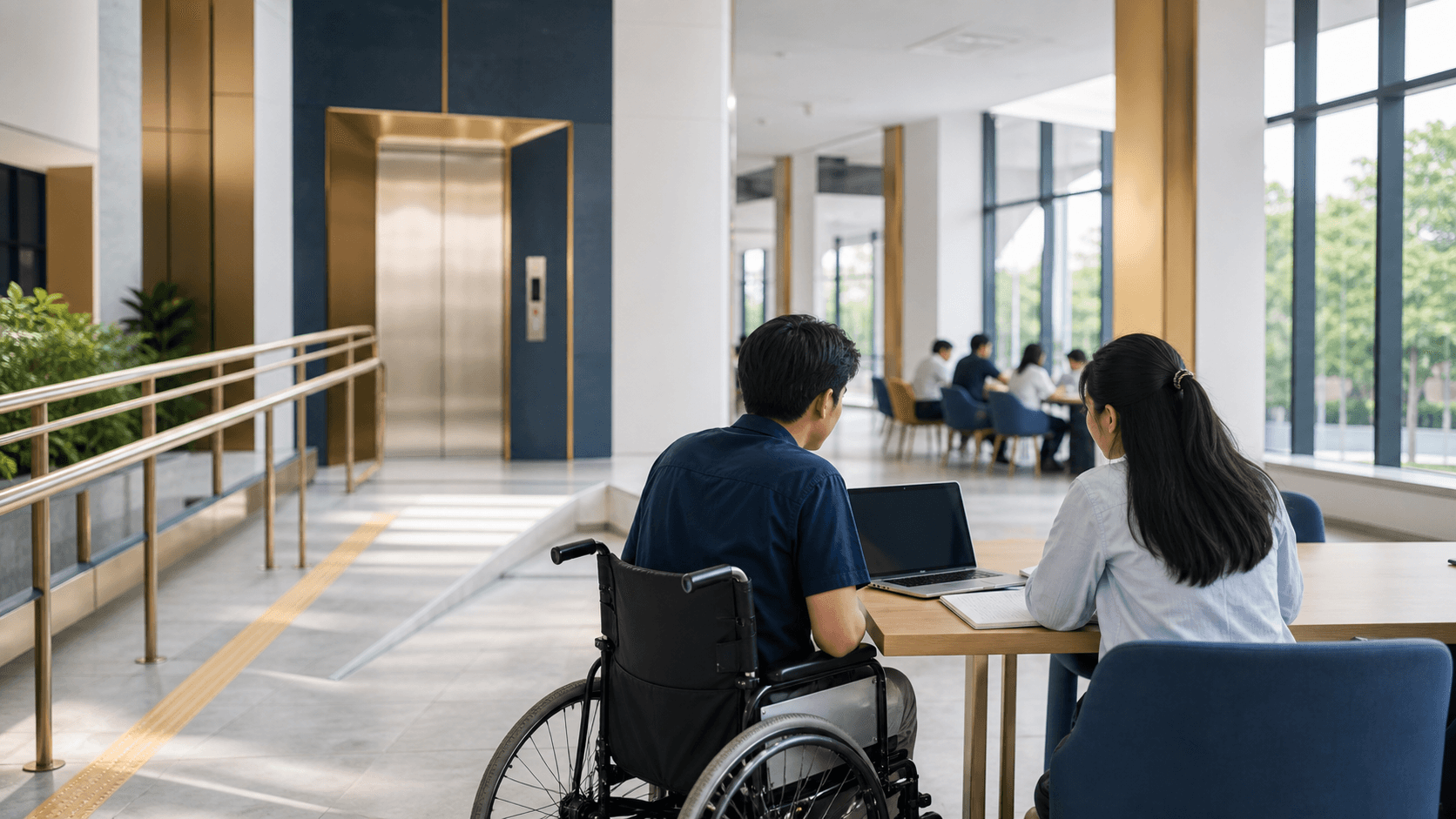
Vietnam MBBS Disability Support: What to Verify
Direct answer: Ask the intended university, in writing, what accessibility and disability-related support is available in classrooms, laboratories, examinations, hostel, transport and clinical placements. An inclusion statement is useful, but it does not answer whether a particular adjustment can be delivered for a particular programme or campus.
Support needs may be physical, sensory, neurological, learning-related, mental-health related or temporary. Share no more personal information than is legitimately required, but provide enough for safe planning. Start before paying a deposit because medical education includes practical work, laboratory safety, patient contact and clinical placements.
What does accessibility mean?
Accessibility is more than a ramp. Check the whole journey.
| Area | Verify | Evidence |
|---|---|---|
| Admissions | Application, interview and health-document support | Named contact and process |
| Teaching | Room access, formats and note support | Course adjustment plan |
| Assessment | Extra time, breaks and assistive technology | Exam procedure |
| Laboratories | Equipment access and supervision | Safety review |
| Clinical training | Mobility, communication, fatigue and patient safety | Placement confirmation |
| Housing | Accessible room, bathroom and route | Room specification |
What do official examples show?
Use official examples as evidence of what one university publishes, not a guarantee for every partner. VinUniversity’s Student Handbook says it does not discriminate on the basis of disability in admissions, housing or services and aims to reduce barriers to learning. Its Diversity, Equity and Inclusion policy refers to equitable access to programmes and services.
VinUniversity’s wellbeing information describes accessible ramps, Braille signage, accessible restrooms, reasonable adjustments, mentors or support workers and accessible housing options. Its student guide describes campus transport that may be offered for a disability or emergency. These remain VinUniversity statements and must not be presented as a national standard.
How are adjustments requested?
Ask for the process, deadline and decision-maker before enrolment. Ask whether support can be requested during admission, which documents are accepted, who can see them, how confidentiality works, who decides whether an adjustment is reasonable and safe, how long approval takes, whether there is an appeal, and whether approval covers lectures, practicals, exams and clinical placements.
VinUniversity’s Fitness to Study procedure provides a separate example for health or wellbeing concerns. It allows self-referral or staff referral, discussion with the student or family, panel review and possible support such as extended deadlines, reduced course load, temporary adjustments and counselling. It also describes leave or voluntary withdrawal as possible outcomes in rare cases where reasonable support is not enough. This is not a universal disability-accommodation policy, so request the intended university’s current document.
What should students check about medical training?
Clinical and practical requirements need an individual safety discussion. A student may need to stand, move between wards, use fine motor skills, communicate with patients, follow infection-control rules, handle equipment and respond to urgent situations. A disability does not automatically determine whether a student can complete the programme, and a university should not promise an outcome without reviewing programme requirements.
Ask the medical faculty to map the requested adjustment against skills labs, simulation, patient-facing activities, hospital transport, early sessions and essential competencies. Clarify whether an adjustment changes assessment or whether a safety requirement cannot be modified. Ask the programme owner, not only an admissions intermediary.
What about examinations and housing?
Get arrangements in writing before the first assessment. Possible support may include accessible seating, extra time, rest breaks, assistive technology, alternative formats or a quieter room; the actual option depends on the assessment and current rules. Ask about library formats, captions, note-taking, tutoring, counselling and digital-platform accessibility.
For hostel, check the route, lift, door width, bathroom, shower, bed height, emergency alarm, dining, laundry, study area and night support. Ask whether accessible rooms are limited, allocated by application, charged differently or located away from the main student community. Confirm airport assistance, luggage, campus routes and what happens if accommodation changes.
Accessibility checklist
- Describe functional support without sending unnecessary sensitive records.
- Ask for current disability, accessibility and fitness-to-study procedures.
- Obtain official contacts for admissions, Student Affairs, registrar and medical faculty.
- Map support across teaching, exams, labs, simulation, clinical sites, hostel and transport.
- Confirm privacy, approval time, renewal and appeal.
- Ask what happens if an adjustment cannot be delivered at a placement.
- Request accessible housing details and total cost in writing.
- Keep the approved plan and review it after arrival.
Read the site’s wellbeing checklist, labs guide, language guide and hostel checklist. Review MBBS in Vietnam, partner pages and official contact.
Official-channel and fraud warning
No consultancy can guarantee admission, a refund, a clinical exemption, a disability outcome, a visa or an Indian licence. Verify policy through the university’s official office. Do not pay a personal account for a special result, share OTPs or send original passports or sensitive medical records to an unverified intermediary. For Aieraa’s official admissions and student-support flow, call +91 93441 41424 or use the official contact page.
FAQs
Can a student with a disability study MBBS in Vietnam?
Possibly. The university must review programme, safety and support requirements individually.
Are accessible hostels available?
Some universities publish features, but coverage and room availability differ. Request current details.
Can I ask for extra exam time?
Possibly, if approved under the current assessment process; apply early.
Will disability prevent clinical training?
Not automatically. The medical faculty should review competencies, safety and adjustments.
Should parents send a full medical file to an agent?
No. Use the university’s official privacy-protected process.
Can Aieraa approve adjustments?
No. Aieraa can organise questions and admissions support, but the university approves arrangements.
Source and limitation note
Verified on 30 July 2026 against VinUniversity Student Handbook, Fitness to Study guidance, DEI policy, wellbeing information, Student Code, the NMC Rules and Regulations index and repository data. Accessibility, adjustments, housing, clinical requirements, privacy, costs and contacts are university-, programme- and student-specific and may change; obtain current written confirmation before enrolment or payment.
Written by Aieraa Overseas Editorial Team
Reviewed by Mr. Vijaya Raghavan (Raghu), Director of Admissions
How should a family prepare for the conversation?
Bring a functional questions list rather than relying on a diagnosis label. Explain what helps the student study, travel, communicate, manage fatigue, use equipment, complete assessments and participate safely in clinical settings. Ask the university to distinguish academic adjustments from medical treatment, emergency care and programme safety requirements. This makes the discussion more practical and reduces unnecessary disclosure.
Before arrival, agree on a review date after orientation. The student may discover that a route, room, timetable or practical session is different from the information supplied during admission. Ask whom to contact outside office hours, how to report a barrier without retaliation, and how a placement change is handled. Keep copies of the approved plan in accessible formats and update the plan when the student?s needs or clinical phase changes.