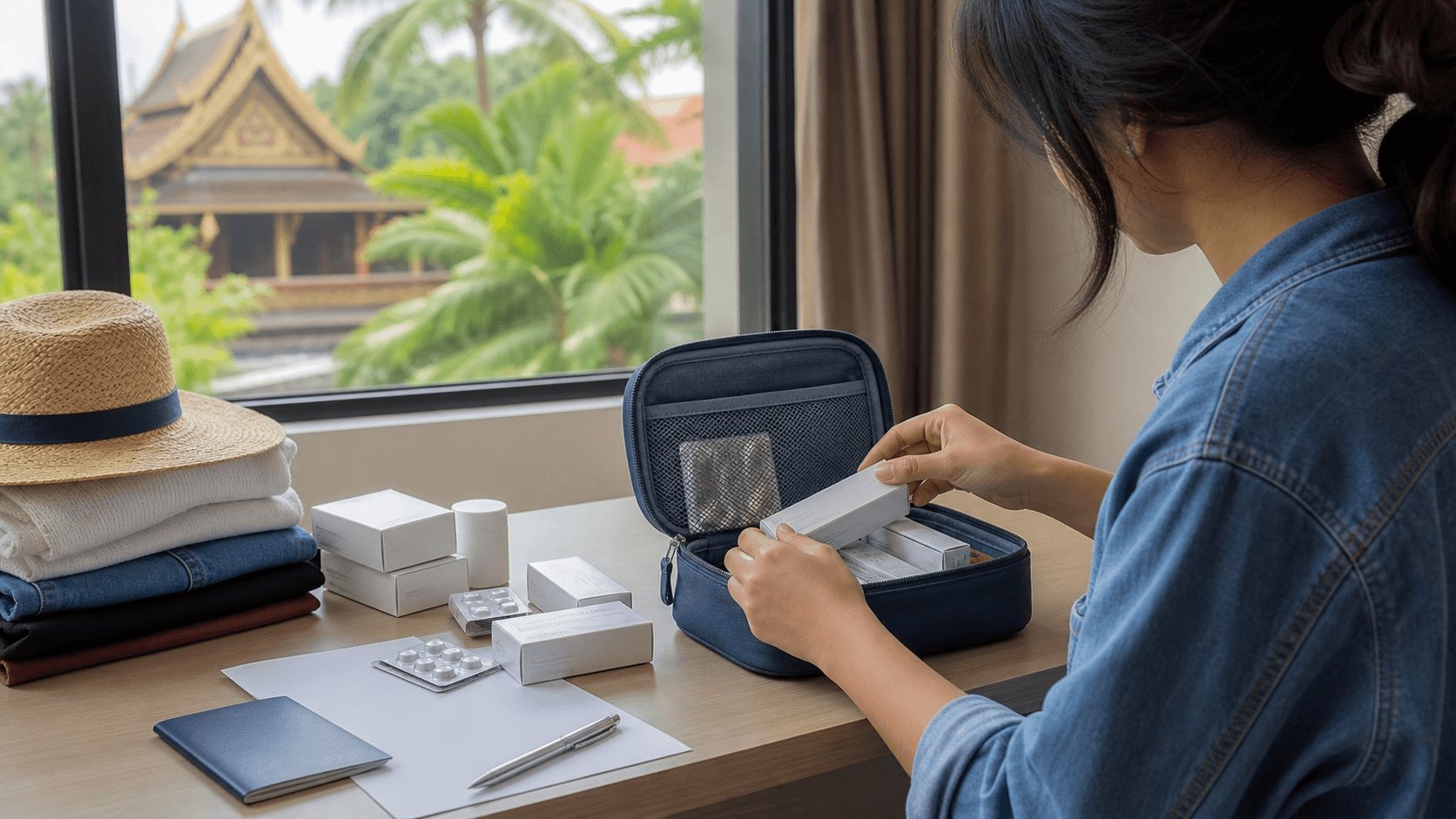
Can Indian Students Carry Medicines to Vietnam for MBBS?
Direct answer: Students can carry personal medicines into Vietnam, but the safe process depends on the medicine, quantity, prescription and customs rules. Keep medicines in their original labelled packaging, carry a doctor’s prescription and supporting letter, and check controlled or psychotropic ingredients before flying. A prescription issued in India does not by itself override Vietnamese import or customs requirements.
This matters more for an MBBS student than for a short holiday because the stay may last several years. The correct plan is usually to carry a reasonable initial supply, confirm whether the medicine is available and lawful in Vietnam, and arrange future refills through a qualified doctor or pharmacy. Do not pack a large unlabelled collection of tablets simply because a friend or agent says they are “common.”
What should a student do before packing?
Make a medicine inventory with the generic name, strength, dose and quantity. Include regular prescriptions, emergency medicines, inhalers, allergy medicines and any over-the-counter products you expect to use. The brand name sold in India may not be recognised by a Vietnamese pharmacist, so record the active ingredient as well.
| Item to record | Why it helps |
|---|---|
| Generic and brand name | Allows a Vietnamese doctor or pharmacist to identify the active ingredient. |
| Strength and dosage | Shows exactly what the student has been prescribed. |
| Quantity or days of use | Helps compare the supply with the prescription and customs guidance. |
| Doctor and clinic details | Supports verification if an authority or hospital asks for clarification. |
| Medical condition and emergency contact | Gives the university or hospital useful context in an emergency. |
Ask the treating doctor whether the student can safely travel with the medicine and whether a different formulation may be easier to source in Vietnam. Do not stop, substitute or change a prescription solely for travel convenience. The article is a travel-planning guide, not medical advice.
Which documents should be in the hand luggage?
Carry the prescription and a concise doctor’s letter with the medicine. The prescription should identify the patient, medicine, strength or concentration, quantity or number of days, dosage, and the prescribing doctor’s name, signature and clinic or hospital address. The Vietnamese Embassy’s published guidance also says medicines should be clearly labelled with the drug name, active ingredients, concentration, expiry date and a prescription.
For a long-term condition, ask whether an English letter is enough for the intended border and healthcare use, or whether a Vietnamese translation or authentication is advisable. Keep the original documents, a printed copy and a secure digital copy. A student should be able to explain why the medicine is needed without relying on a WhatsApp message from an intermediary.
- Keep medicine in the manufacturer’s labelled packaging.
- Do not combine different tablets in one unmarked pouch.
- Carry the prescription next to the medicine, not only in checked baggage.
- Record the expiry date and storage instructions.
- Check airline rules separately for liquids, injections, needles and temperature-sensitive items.
What are the published limits for controlled medicines?
Controlled, narcotic, psychotropic and precursor medicines require extra caution. The Embassy of Viet Nam in Australia states that personal narcotic medicines may be limited to the amount for up to seven days at the prescribed dose, while psychotropic medicines or medicines containing drug precursors may be limited to up to ten days. The guidance says these medicines must be declared to customs and must not exceed the amount shown in the prescription.
The categories can be wider than a student expects. A medicine that is routinely prescribed in India may have a different legal status in Vietnam. Check the active ingredient, not just the Indian brand name. If a student needs more than the published quantity, the Embassy guidance says the traveller can declare the medicine at the port of entry with an itinerary and proof of medical necessity, but customs decides whether it may be brought in. Do not assume that a letter guarantees clearance.
For non-addictive, non-psychotropic and non-precursor personal medicine, the same Embassy page describes a limit of no more than three receipts per year per person or organisation, with total customs value no more than US$200 per receipt. It also describes a separate critical-illness limit. These are time-sensitive rules and should be checked again before travel.
Should medicines be declared at customs?
Declare medicines when the rule or customs officer requires it, especially controlled medicines or a supply above the stated threshold. The UK government’s current Vietnam entry guidance advises travellers taking prescription medicine to keep it in hand luggage with a copy of the prescription and says prescription medication with total import value above US$100 must be declared. Because official guidance can use different thresholds for different situations, students should not calculate a “safe” amount from one general number.
At the airport, answer questions accurately and show the prescription if asked. Do not conceal medicine, remove labels or describe a controlled medicine as a vitamin. If the student is unsure, ask the Vietnamese Embassy, Vietnamese Immigration or customs authority before departure. The university’s international office may help identify the correct local contact, but it cannot waive customs law.
How should students plan a multi-year refill?
Plan the first refill before the initial supply runs out. Ask the intended university about nearby hospitals, clinics, student insurance and medical support. A Vietnamese doctor may need to review the student before prescribing a local equivalent. The name, strength, availability and dispensing rules can differ from India.
- Bring the medical summary and recent prescription history.
- Ask the university for a reputable clinic or hospital contact.
- Confirm whether the student’s insurance covers consultation, tests and medicines.
- Keep enough medicine for reasonable travel delays, within lawful limits.
- Never buy prescription medicine from an informal online seller or an agent’s personal stock.
For arrival planning, link this checklist with the site’s medical-fitness certificate guide, student health-insurance checklist and hostel checklist for parents. Those pages explain related planning questions, but the prescription and customs requirements here remain separate.
What should parents tell the university?
Share only necessary medical information through the university’s official student-support channel. The student should tell the international office about a serious condition, regular treatment, allergies or accessibility needs early enough to plan safe care. Ask who should be contacted during an emergency and how health information is stored.
Parents should give the student a current medication list, doctor contact, insurance details and emergency consent information where appropriate. They should not hand over original prescriptions, passports or banking credentials to a consultancy. A support partner may help coordinate a question, but treatment decisions belong to the student and qualified healthcare professionals.
Official-channel and fraud warning
No consultancy can guarantee medicine clearance, a customs decision, a local prescription, a pharmacy supply or an insurance claim. Verify the medicine’s legal status and travel documents with Vietnamese authorities, the airline and the treating doctor. Use only the university, hospital, insurer or official government contact published on its own website. For Aieraa’s official admissions and student-support flow, call +91 93441 41424 or use the official contact page.
FAQs
Can I carry my regular medicines from India to Vietnam?
Often, personal medicines can be carried, but the medicine, quantity, labelling, prescription and customs requirements matter. Check controlled ingredients separately.
Can I put medicines in checked baggage?
Keep essential medicines and documents in hand luggage. Airline rules may apply to liquids, injections, needles and temperature-sensitive medicines.
Is an Indian prescription enough?
It may support the journey, but it does not override Vietnamese law. Carry a complete prescription and doctor’s letter, and seek authority guidance for restricted medicines.
What is the seven-day or ten-day rule?
Vietnamese Embassy guidance describes up to seven days for narcotic medicines and up to ten days for psychotropic medicines or drug precursors, at the prescribed dose. Customs must be checked for the individual medicine.
Can a student carry a year’s supply?
Do not assume this is allowed. Ask the relevant Vietnamese authority about the exact medicine and quantity, and plan lawful local medical follow-up.
Can an agent buy or carry the medicine for the student?
The student should control their own prescription and medicine. An intermediary should not ask for a prescription, OTP, passport or payment to arrange an undocumented supply.
Source and limitation note
Verified on 21 July 2026 against the Embassy of Viet Nam in Australia’s “Bring medication into Viet Nam” guidance, the Vietnam National Public Service Portal’s personal-medicine import procedure, and the UK government’s Vietnam entry guidance. Customs thresholds, medicine classifications, airline rules, translations and local dispensing requirements can change or depend on the specific medicine. Confirm the current position with Vietnamese authorities, the airline and the treating doctor before departure.
Written by Aieraa Overseas Editorial Team
Reviewed by Mr. Vijaya Raghavan (Raghu), Director of Admissions