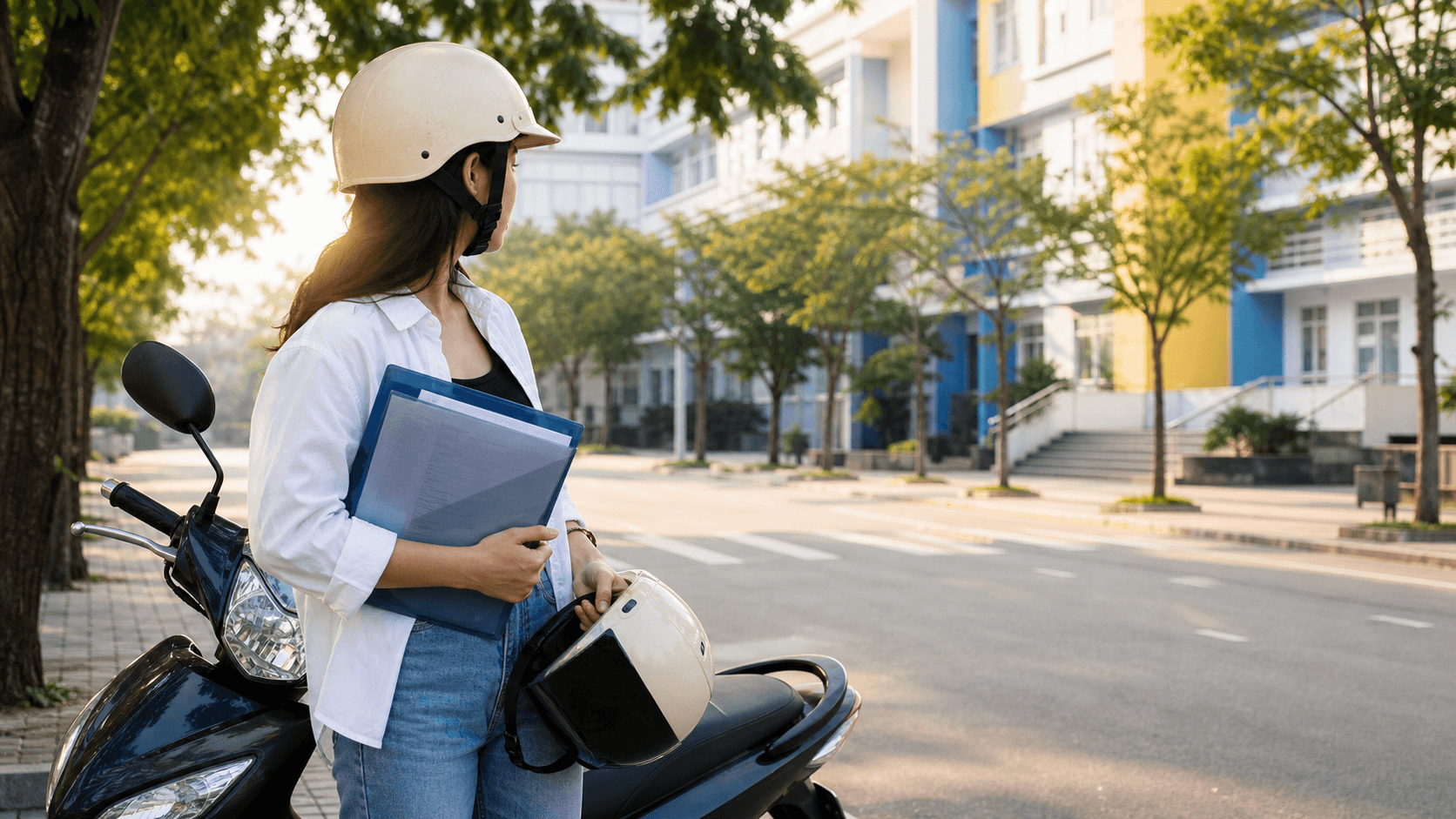
Vietnam MBBS Driving Licence and Road Safety Checklist
Direct answer: An Indian MBBS student should not ride a scooter in Vietnam merely because a rental shop, friend or agent says it is allowed. First confirm the vehicle category, the licence or recognised permit required for that category, whether the document is valid in Vietnam, the vehicle registration, helmet and insurance position, and the university’s transport advice. If any part is unclear, use an authorised taxi, bus, university shuttle or licensed driver until the position is confirmed.
This is a practical safety and compliance guide, not legal advice. Vietnam’s traffic law prohibits operating a motor vehicle without the licence required for the vehicle. The current law also says that a foreign-issued International Driving Permit must be carried with the matching national driving licence and used in accordance with Vietnamese law. A student’s Indian licence or an online “international licence” is not automatically enough.
What must be checked before riding?
There are four separate questions: person, vehicle, document and insurance. Confirm each in writing where possible. A valid document for a car does not necessarily authorise a motorcycle. A permit that looks official may not cover the scooter’s category. A rental agreement does not replace the legal requirements.
| Check | What to verify |
|---|---|
| Rider | Age, health, practical experience, helmet fit and ability to understand local traffic signs and instructions. |
| Licence | Correct category, current validity, issuing authority and recognition in Vietnam; carry the underlying national licence where required. |
| Vehicle | Registration, condition, brakes, tyres, lights, mirrors, horn and rental or ownership documents. |
| Safety equipment | Approved helmet that fits, closed shoes, weather protection and visibility aids; avoid loose clothing near moving parts. |
| Insurance | What the policy covers, exclusions for an unlicensed rider, passenger rules, medical costs and the claims process. |
| Route | Campus access, traffic density, flood or weather risk, night visibility, clinical-site travel and an alternative route. |
Photograph the vehicle condition and keep a copy of the rental contract, but do not leave your passport as an informal deposit. Ask the authorised provider how identity and residence documents are handled.
Does an Indian licence or IDP work in Vietnam?
Do not assume that an Indian driving licence or IDP is accepted for every Vietnamese vehicle. Vietnam’s Law 36/2024/QH15 states that a foreign driver using an International Driving Permit issued by a Vienna Convention member must carry both the IDP and the national driving licence corresponding to the vehicle category. The document must be current and the driver must follow Vietnamese traffic law. The official Vietnamese government service portal separately describes IDP procedures and eligibility; it does not turn every foreign licence into a universal Vietnamese motorcycle licence.
Before travel, ask the Vietnamese licensing authority, the university’s international-student office or a properly authorised service provider to confirm the current route for your nationality, residence status and vehicle category. Ask for the answer in writing and retain the source URL and date. A student visa, temporary residence card and driving entitlement are different matters.
Do not rely on a social-media seller offering a laminated card, a translated card or a “guaranteed conversion.” If the authority says a Vietnamese licence is required, follow the current application, health, training and testing process. Requirements may differ for a motorcycle, motorbike, car, electric vehicle or a vehicle above a particular engine or power category.
What Vietnamese traffic rules matter most?
Vietnamese traffic law requires a suitable licence, prohibits alcohol while driving and requires compliance with road-safety rules. The current road-order and safety law prohibits operating a motor vehicle without the required licence, driving with alcohol in the blood or breath, racing and dangerous weaving. It also requires a driver to carry the relevant documents and follow the rules applicable to the vehicle.
Wear a properly fastened helmet on every ride, including a short trip from hostel to class. Never carry more passengers than legally permitted, text while moving, ride against traffic, use a phone in one hand or assume that an empty road is safe. Slow down around hospitals, school gates, wet roads, buses, junctions and parked vehicles. Do not ride after drinking or when tired after a night shift or examination.
Students should learn the local road layout before riding alone. Practise braking, turning, lane position and signalling in a controlled area, not in heavy traffic. Avoid lending the vehicle or allowing an unlicensed friend to ride it; insurance and liability may be affected.
Should an MBBS student rent, buy or avoid a scooter?
The safest choice depends on competence, route, weather, clinical schedule and legal documentation. A scooter may appear convenient, but convenience is not proof that it is suitable. Students living near campus may prefer walking, a university shuttle, bus or licensed taxi. Students travelling to a distant clinical site should ask the university how students are expected to travel and whether any transport is arranged.
If renting, use a reputable provider that gives a written contract, vehicle documents, emergency contact and clear insurance terms. If buying, verify ownership, registration transfer, maintenance and sale paperwork through the relevant authority. Do not buy a vehicle with unclear documents because a low price can create legal, repair and resale risks.
Parents should ask for the actual travel plan rather than assuming that “bike available” means a safe campus arrangement. Confirm who pays for fuel, repairs, accidents, medical treatment, towing and replacement. Read the student-transport guide for clinical travel questions.
What should happen after an accident?
Protect people first, then follow the official reporting and insurance process. Stop safely, call local emergency services if anyone is injured, avoid moving an injured person unless there is an immediate danger, and contact the university’s official emergency route. Exchange details through the lawful process and do not sign a statement you cannot understand. Notify the insurer and rental provider promptly, following the policy’s instructions.
Keep photographs, time, location, vehicle details, witness contacts and medical records where safe and lawful. Do not post the incident or another person’s information on social media. If a passport, phone or residence document is lost during the incident, use the site’s passport emergency checklist and contact the Indian Embassy through its official channel.
Road-safety checklist for Indian students
- Ask the university whether riding is permitted or advised for the campus and clinical routes.
- Confirm the exact vehicle category and matching licence requirement.
- Verify the issuing authority, validity and recognition of any IDP or foreign licence.
- Carry the national licence with the IDP when the law requires both.
- Check vehicle registration, contract, insurance and emergency contacts.
- Wear a correctly fitted helmet and practise in a controlled area.
- Never ride after alcohol, when exhausted or while using a phone.
- Plan a safer alternative for rain, flooding, night travel and clinical shifts.
- Save emergency, university, insurer and rental-provider numbers.
- Re-check the rules after a change in visa, residence status, vehicle, licence or law.
For wider preparation, connect this guide with the MBBS in Vietnam overview, temporary-residence checklist, health-insurance guide, emergency-contacts checklist and official contact page.
Official-channel and fraud warning
No consultancy can guarantee admission, a visa, a driving licence, a refund, an academic outcome or an Indian licence. Verify university, licensing and immigration instructions through official channels. Do not pay a personal account, share OTPs or hand over an original passport to an unverified intermediary. For Aieraa’s official admissions and student-support flow, call +91 93441 41424 or use the official contact page.
FAQs
Can I ride a rented scooter with my Indian licence?
Do not assume so. Verify the vehicle category, Vietnamese recognition and any requirement to carry an IDP with the matching national licence.
Is an online international driving licence enough?
Not necessarily. Use only a document issued or recognised through an authorised route and confirm it directly with the relevant Vietnamese authority.
Does a student visa give driving permission?
No. Immigration status and driving entitlement are separate questions. Confirm both independently.
Can a student use a car licence for a motorcycle?
Do not assume that one category covers another. The licence must match the vehicle being driven.
Will rental insurance pay after an accident?
Only according to the policy. Unlicensed driving, alcohol, excluded passengers or policy breaches may affect coverage.
What is the safer option if I am unsure?
Do not ride until the documents and route are confirmed. Use walking, bus, university transport or a licensed taxi and ask the international-student office for current guidance.
Source and limitation note
Verified on 20 August 2026 against Vietnam’s Law 36/2024/QH15 on Road Traffic Order and Safety, the Vietnam National Public Service Portal IDP procedure, Vietnam’s official consolidated IDP regulation and the Embassy of India in Hanoi student advisory. Licence categories, foreign-document recognition, residence requirements, insurance terms, penalties, road conditions and university transport arrangements may change and may depend on the rider, vehicle and locality. Confirm current written instructions before riding, renting or buying a vehicle.
Written by Aieraa Overseas Editorial Team
Reviewed by Mr. Vijaya Raghavan (Raghu), Director of Admissions