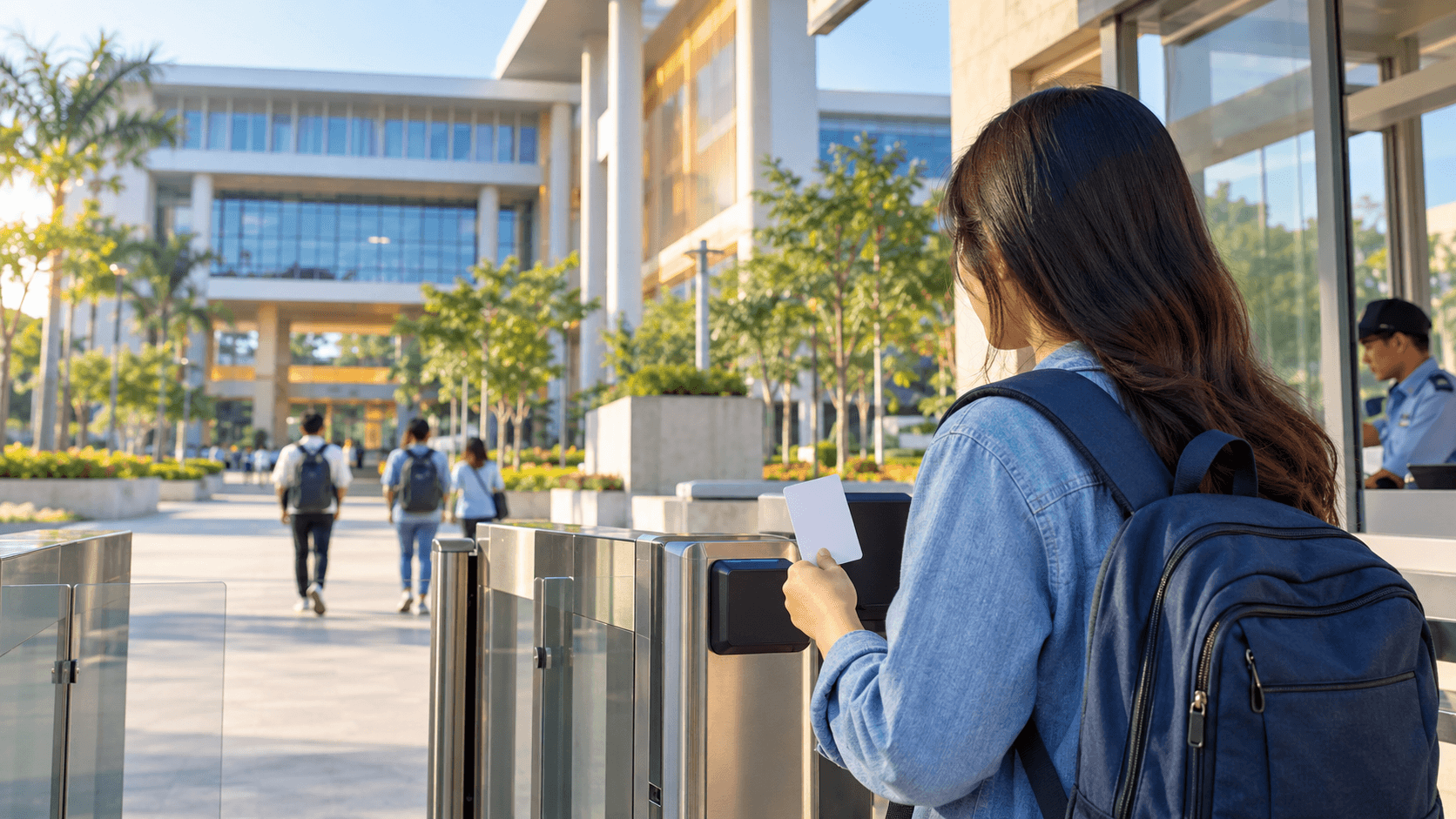
<h1>Vietnam MBBS Student ID and Campus Access Checklist</h1><p><strong>Direct answer:</strong> An Indian MBBS student should collect the student ID only through the university’s official process, confirm what the card actually opens, keep a secure backup of the card and enrolment details, and report loss or damage immediately. A student card may be used for identification, residence entry, library or laboratory access, attendance, transport or payments, but the functions differ by university and campus. It is not a substitute for a passport, visa or temporary-residence document.</p><p>Families should ask the intended university for its current student-affairs, residential-life and campus-security instructions before arrival. This article uses current public VinUniversity guidance as an example of the questions to ask; it does not turn one university’s access rules or replacement charge into a Vietnam-wide rule. For broader preparation, see our <a href="/blog/vietnam-mbbs-arrival-enrolment-documents-indian-checklist">arrival and enrolment checklist</a>, <a href="/blog/vietnam-mbbs-temporary-residence-declaration-student-checklist">temporary-residence guide</a>, <a href="/blog/vietnam-mbbs-student-housing-rental-checklist">housing checklist</a> and <a href="/mbbs-in-vietnam">MBBS in Vietnam guide</a>.</p><h2>What should a student ID checklist cover?</h2><p><strong>Before travelling, confirm the issuing office, collection date, card purpose and replacement process in writing.</strong> Ask the university these questions:</p><table><thead><tr><th>Area</th><th>What to confirm</th></tr></thead><tbody><tr><td>Issuing office</td><td>Student Affairs, international office, residence team or another named department</td></tr><tr><td>Collection</td><td>Whether the card is collected at orientation, move-in, registration or after document verification</td></tr><tr><td>Identity details</td><td>Name spelling, student number, photograph, programme, intake and card validity</td></tr><tr><td>Access</td><td>Campus gates, residence, classrooms, library, laboratory, clinic, transport or dining functions</td></tr><tr><td>Digital account</td><td>Whether a mobile app, QR code, password or two-factor login is linked to the card</td></tr><tr><td>Loss or damage</td><td>Reporting channel, temporary access, replacement time, fee and identity documents needed</td></tr><tr><td>Security</td><td>Whether the card may be lent, copied, photographed or used by another person</td></tr></table><p>Do not assume that a card is active on the day it is handed over. Ask whether the university must activate it, whether a passport or visa check is pending, and whom to contact if a turnstile or residence reader rejects it. Keep the official answer in the university email account or student portal.</p><h2>How should students protect the card?</h2><p><strong>Treat the student ID like a controlled access credential, not just a plastic identity card.</strong> Keep it in a wallet or lanyard that does not display the student number in public. Do not post a front-and-back photograph on social media or send it to unknown agents. If the card is linked to a payment or app account, protect the account password separately and enable the university’s recommended security controls.</p><p>Carry the passport only when the university or competent authority requires it, and keep a secure copy of the identity page, visa or residence document and enrolment proof. A photograph of a passport is not legal permission to remain in Vietnam. If security staff ask for identification, follow the campus procedure and contact the named student-affairs office if the request is unclear.</p><p>Parents can keep a private record of the student number, university office, emergency contact and card-issue date. They should not circulate the student’s ID image in family groups or ask an unofficial intermediary to “activate” access for a fee.</p><h2>What should a student do after losing the card?</h2><p><strong>Report the loss immediately through the official university or residence channel and ask for temporary access.</strong> The student should record when and where the card was last seen, check the university’s lost-and-found process, and ask whether the card can be blocked. If it is linked to a wallet, transport balance, library account or payment function, request suspension of those services too.</p><ol><li>Contact Student Affairs, the international office or residence security using the published channel.</li><li>State the student name, student number, residence or campus location, and approximate time of loss.</li><li>Ask for a case number, temporary entry method and replacement instructions.</li><li>Confirm whether the old card has been deactivated and whether any balance or access rights are protected.</li><li>Pay a replacement charge only through the university’s official payment route and keep the receipt.</li><li>Collect the replacement personally or through a documented authorised process.</li></ol><p>VinUniversity’s public campus guidance directs students who lose a student card to email its Student Affairs channel, while its public financial tariff lists a replacement charge for a lost or damaged card. Those are examples of a university-specific process, not a fee promise for another institution. Ask for the current tariff before paying.</p><h2>Campus, hostel and visitor access are different</h2><p><strong>A card may open one area but not authorise every movement or visitor.</strong> Confirm separately how students enter the academic campus, residence, laboratory, library and clinical site. Residence rules may include quiet hours, late-return procedures, guest registration, overnight absence reporting and temporary-residence obligations. A visitor may need a form, identification and an escort even when the student has unrestricted access.</p><p>VinUniversity’s current Residential Life Guideline, issued 8 October 2026, says residents must keep identification and immigration information current, follow campus-access and security procedures after late returns, notify the residence team about overnight absence, and register guests through the stated process. A student at another university may have different hours, forms or responsibilities. The safe approach is to obtain the intended university’s current written rule, especially when parents plan to visit.</p><p>Clinical areas are more restricted than ordinary campus areas. A student ID does not itself permit entry to a hospital ward, patient-record system, pharmacy, laboratory or procedure room. Clinical access depends on the university, host facility, supervisor, training stage, health requirements and confidentiality rules. Use our <a href="/blog/vietnam-mbbs-patient-confidentiality-clinical-training">patient-confidentiality guide</a> and <a href="/blog/vietnam-mbbs-clinical-observation-supervision-checklist">clinical scope guide</a> when preparing for postings.</p><h2>What should parents verify before enrolment?</h2><p><strong>Parents should ask for the access and replacement workflow before paying fees or booking travel.</strong> Request the official student handbook or student-affairs contact, the first-day collection process, residence entry rules, visitor policy, lost-card procedure, current charges, payment beneficiary and emergency escalation route. Confirm whether international students need a passport copy, visa copy, photograph, local phone number or temporary-residence record before the card is issued.</p><p>Ask whether students can access classes during a card replacement, whether an escort is required, and what happens if the card is lost while travelling outside the campus. Keep written answers with the admission file. If a consultant gives a different answer, ask the university to confirm it directly.</p><h2>Official-channel and fraud warning</h2><p><strong>No consultancy can guarantee admission, a visa, a refund, an academic result, a clinical placement or an Indian licence.</strong> Verify university, immigration and payment details through official channels. Do not pay a personal account, share OTPs, or hand over an original passport to an unverified intermediary. For Aieraa’s official support, call <strong>+91 93441 41424</strong> or use the <a href="/contact">official contact page</a>.</p><h2>Frequently asked questions</h2><h3>Is a Vietnam university student ID the same as a visa?</h3><p>No. A student ID identifies or provides access to university services. The passport, visa, residence card or other immigration document governs permission to enter and remain in Vietnam.</p><h3>Can a student lend the card to a friend?</h3><p>Do not assume that lending is allowed. Access cards are commonly personal credentials; ask the university’s current student and security rules.</p><h3>What if the card does not work at the hostel gate?</h3><p>Contact residence security or the official residence team, show the required identification and ask for a temporary access method. Do not tailgate another resident or pay an unofficial person to bypass the reader.</p><h3>Can parents use the student’s card to enter?</h3><p>No. Visitors should follow the university’s guest-registration process. A student’s access credential should not be shared.</p><h3>Will a lost-card replacement fee be the same at every university?</h3><p>No. Charges, waiver rules, timing and payment channels are university-specific and may change. Obtain the current tariff directly from the intended university.</p><h3>Can Aieraa issue or activate a university card?</h3><p>No. Aieraa can help a family ask the intended university for the correct process, but the university’s authorised student-affairs, residence or security office controls the card.</p><p><em>Verified on 2 November 2026 against VinUniversity’s Week of Welcome 2026 information, Residential Life Guideline GDL-SAM-008-V6.0 issued 8 October 2026, public campus-living guidance and the current financial tariff. Student-card functions, access hours, guest rules, replacement fees, residence procedures and clinical-site access vary by university, campus, residence and date; obtain current written instructions before travel.</em></p><p><strong>Written by Aieraa Overseas Editorial Team</strong><br><strong>Reviewed by Mr. Vijaya Raghavan (Raghu), Director of Admissions</strong></p>
Latest UpdateNovember 2, 2026Updated November 2, 20267 min read
Vietnam MBBS Student ID and Campus Access Checklist