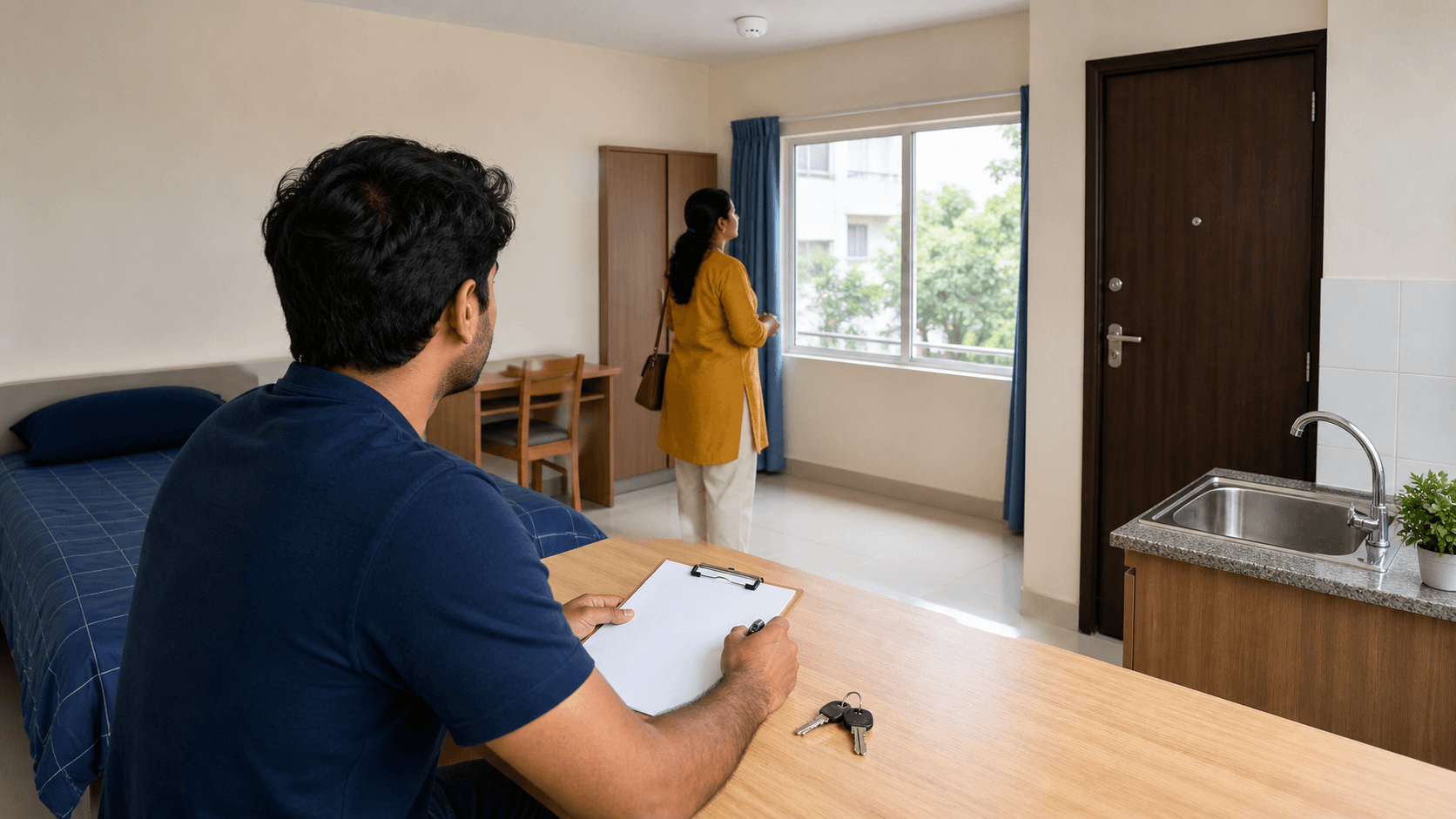
<h1>Vietnam MBBS Student Housing: Rental Checklist for Indian Students</h1><p><strong>Direct answer:</strong> Before moving into private accommodation in Vietnam, an Indian MBBS student should confirm the written lease, total move-in cost, safety features, internet and utilities, house rules, cancellation terms, landlord identity, travel time to the university and how the accommodation provider will handle temporary-residence declaration. A hostel or serviced room may reduce some administrative work, but its rules and fees still need to be read carefully.</p><p>Housing is part of the study decision, not an afterthought. For broader living guidance, see our <a href="/blog/student-life-vietnam-indian-mbbs-students-2026">student-life guide</a>, <a href="/blog/mbbs-hostel-checklist-indian-parents-vietnam">hostel checklist</a> and <a href="/blog/vietnam-mbbs-temporary-residence-declaration-student-checklist">temporary-residence checklist</a>.</p><h2>Hostel or private rental: which is easier?</h2><p><strong>Neither option is automatically better; the right choice depends on support, rules, distance and the student’s readiness to manage a lease.</strong> A university or managed hostel may offer a clearer check-in process, wardens, shared facilities and student support. A private room or apartment may offer more privacy and flexibility, but the student or parent must check the landlord, contract, deposit, utilities, repairs, visitors, safety and residence paperwork.</p><table><thead><tr><th>Area</th><th>Hostel or managed housing</th><th>Private rental</th></tr></thead><tbody><tr><td>Contract</td><td>Read residence rules, fee schedule and refund terms</td><td>Use a written lease identifying parties, address and term</td></tr><tr><td>Support</td><td>Ask who handles repairs, emergencies and complaints</td><td>Record landlord, agent and emergency contacts</td></tr><tr><td>Costs</td><td>Check what utilities, meals, deposits and transport include</td><td>Check rent, deposit, utilities, internet, management and cleaning fees</td></tr><tr><td>Residence</td><td>Confirm who submits the accommodation declaration</td><td>Confirm the landlord’s process before moving in</td></tr><tr><td>Rules</td><td>Check visitors, quiet hours, room changes and curfew if any</td><td>Check guests, subletting, pets, cooking and early termination</td></tr></tbody></table><h2>What should the written lease contain?</h2><p><strong>A student should not rely on a chat message or verbal promise for a long stay.</strong> The lease should identify the landlord or authorised lessor, student, property address, room or apartment, start and end dates, rent, payment dates, deposit, included services, meter readings, repair responsibility, notice period, early termination, refund conditions and handover process. Ask for an English explanation if the contract is in Vietnamese, but keep the Vietnamese version that the parties sign.</p><p>Check whether the person offering the room is the owner, a licensed manager or a tenant seeking permission to sublet. Ask for written authority where relevant. Photograph the room, furniture, meter readings and existing damage at check-in, and send the record to the landlord or manager. This reduces disputes over the deposit later.</p><h2>Which costs should parents calculate?</h2><p><strong>Calculate the first month and the full semester separately.</strong> The move-in amount may include advance rent, security deposit, electricity, water, internet, cleaning, management, key or access-card charges and a service fee. Ask whether utilities are metered, billed at a published rate or charged as a fixed amount. Check the due date, late fee, currency and payment receipt.</p><p>Do not compare a headline room rent with an all-inclusive hostel price until the categories match. Add travel to campus, meals, laundry, insurance, occasional repairs and a contingency for moving. Exchange rates and local charges can change, so treat any estimate as a planning figure rather than a quote.</p><h2>Official-channel and fraud warning</h2><p><strong>No consultancy can guarantee admission, a visa, a refund, an academic outcome or an Indian licence.</strong> Verify university instructions, accommodation terms and payment details through official channels. Do not pay a personal account, share OTPs or hand over an original passport to an unverified intermediary. For Aieraa’s official admissions and student-support flow, call <strong>+91 93441 41424</strong> or use the <a href="/contact">official contact page</a>.</p><h2>What safety checks matter in a student room?</h2><p><strong>Inspect the route in and out of the building and test the basics before signing.</strong> Check the door lock, emergency exit, stairway, lighting, smoke detector if provided, electrical sockets, air-conditioning, water pressure, bathroom drainage, cooking arrangements, window security, lift access, fire equipment, CCTV in common areas and the building’s emergency contact. Ask whether the room has a legal occupancy arrangement and whether the landlord permits foreign students.</p><p>Safety is more than a camera at the entrance. Ask about overnight access, visitors, quiet hours, security deposits, room changes, maintenance response and what happens if the student becomes ill. A parent should receive the full address and an emergency contact, while the student should know the nearest clinic, police contact and university support channel.</p><h2>How does temporary residence fit into housing?</h2><p><strong>Confirm the residence-declaration process with the accommodation provider before check-in.</strong> Foreign students must follow the current Vietnamese immigration and accommodation-registration requirements. The landlord, hostel or property manager may submit information through the applicable local process, but the student should not assume that this has happened. Ask what passport, visa and address details are needed, when the declaration is filed and how an address change is handled.</p><p>Keep a copy or reference number where one is provided. If the student changes rooms, moves to a new city or extends the stay, ask what must be updated. Our <a href="/blog/vietnam-mbbs-temporary-residence-declaration-student-checklist">temporary-residence article</a> explains the verification questions; the current immigration authority and accommodation provider remain the controlling sources.</p><h2>What should a parent verify before sending a deposit?</h2><p><strong>Verify the property, recipient and refund terms before transferring money.</strong> Ask for the lease, landlord or manager identity, property address, deposit amount, refund conditions, bank beneficiary name and receipt. Do not pay a personal account merely because an intermediary says it is convenient. If an education partner arranges housing, ask whether it is a university/managed facility or a separate private contract, who is responsible for repairs and how a dispute is escalated.</p><p>Never send an original passport as security. Share only the document details needed for the verified accommodation and immigration process. Keep payment proof, photographs, messages and the signed contract in both the parent’s and student’s records.</p><h2>Move-in checklist</h2><p><strong>Complete this checklist on arrival:</strong></p><ul><li>confirm the address, room number and landlord or manager contact;</li><li>photograph walls, furniture, appliances, meters and keys;</li><li>test the lock, water, electricity, internet and air-conditioning;</li><li>locate exits, fire equipment and the emergency route;</li><li>record included and excluded charges;</li><li>confirm temporary-residence declaration and keep evidence where available;</li><li>save the contract, inventory, receipt and deposit terms; and</li><li>tell the university or Aieraa support contact if a material issue is unresolved.</li></ul><h2>Frequently asked questions</h2><h3>Can an Indian MBBS student rent a private room in Vietnam?</h3><p>Many foreign students use private accommodation, but eligibility, landlord requirements, lease terms and residence procedures must be checked for the student’s status and location.</p><h3>Is hostel accommodation always safer than a private rental?</h3><p>Not automatically. Compare locks, exits, supervision, maintenance, visitor rules, distance and emergency support rather than relying on the label.</p><h3>Should the lease be in English?</h3><p>Ask for a clear explanation in a language the student understands and keep the signed local-language version. If important terms remain unclear, obtain qualified local help before signing.</p><h3>Who files temporary residence information?</h3><p>The accommodation provider commonly handles the declaration process, but responsibilities and systems can vary. Confirm directly and retain evidence where available.</p><h3>How much deposit should a student pay?</h3><p>There is no single safe amount for every property. Use the written lease, verify the recipient and do not transfer funds until refund conditions and the handover record are clear.</p><h3>Can Aieraa guarantee a particular room or landlord?</h3><p>No. Aieraa can help students understand the support flow and ask verification questions, but the final property, contract and local compliance must be confirmed through the responsible accommodation provider.</p><p><em>Verified on 27 August 2026 against Vietnam’s official legal-information materials on foreign-resident housing leases; the Vietnam immigration and temporary-residence information referenced in our current student checklist; and VinUniversity’s official student handbooks page, including Residential Living Guidelines and the International Student Welcome Guide. Rental prices, building safety, lease terms, residence procedures, utilities and accommodation availability vary by property, city, provider and date. Obtain current written terms before paying a deposit or moving in.</em></p><p><strong>Written by Aieraa Overseas Editorial Team</strong><br><strong>Reviewed by Mr. Vijaya Raghavan (Raghu), Director of Admissions</strong></p>
Latest UpdateAugust 27, 2026Updated August 27, 20267 min read
Vietnam MBBS Student Housing: Rental Checklist