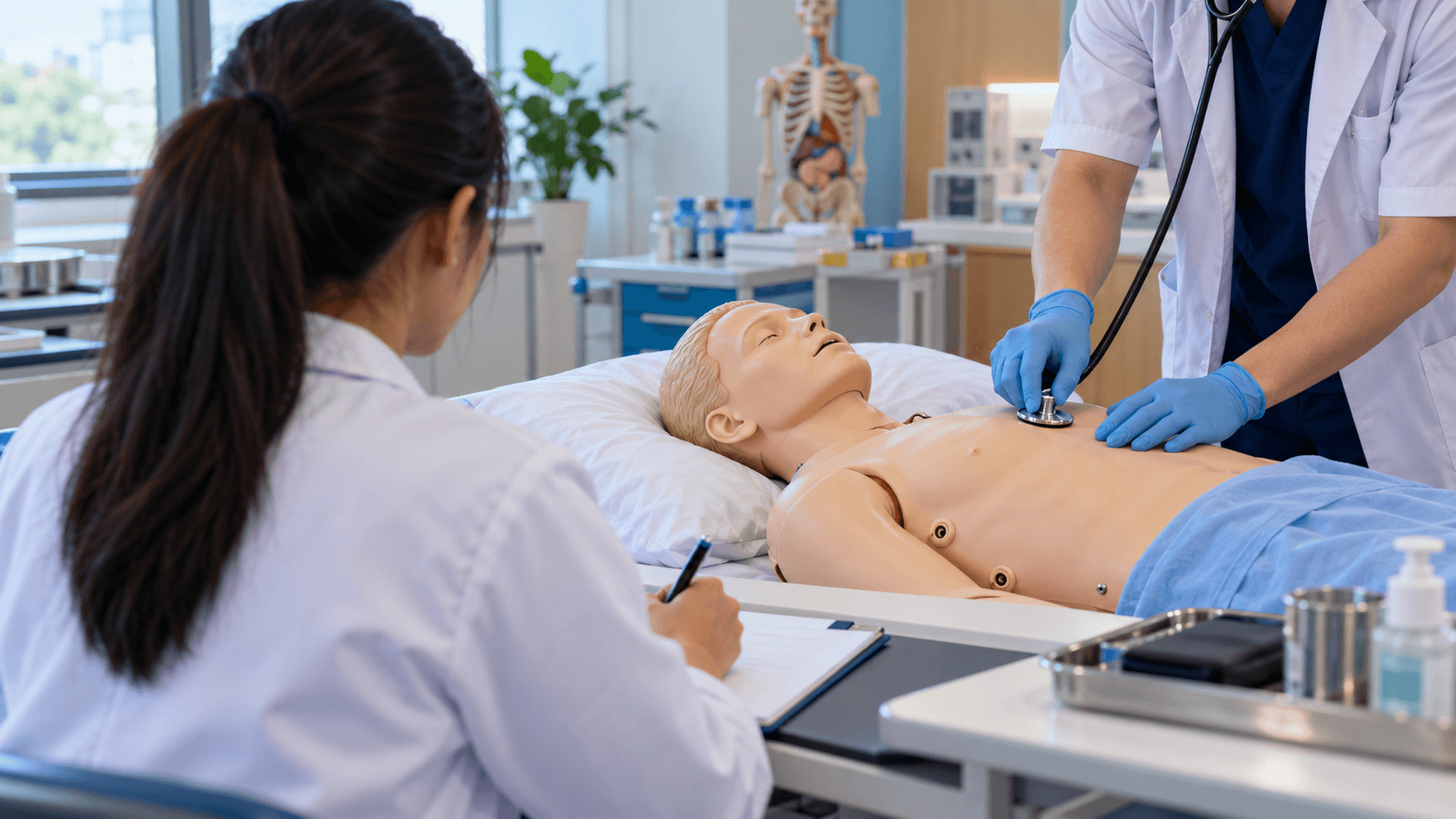
<h1>Vietnam MBBS Clinical Observation and Supervision Checklist</h1><p><strong>Direct answer:</strong> A medical student should not treat hospital access, a white coat, a student ID or a verbal invitation as permission to perform a clinical task independently. Before a posting, ask the university and host facility to define what the student may observe, practise in simulation, perform under direct supervision, record, or never do. Confirm the supervisor, patient-consent process, language support, infection-control requirements, documentation rules and escalation contact.</p><p>Vietnam’s Law on Medical Examination and Treatment, Law No. 15/2023/QH15, states that learners and students may provide medical examination and treatment only under practitioners’ supervision, and that practice arrangements must respect patient rights and obligations. The law’s internship provisions concern formal practice and do not create a blanket permission for every MBBS student to perform every task. A current VinUniversity internship policy illustrates how one institution uses defined learning objectives, host supervision, health screening and feedback; it is an example, not a national template. For related planning, read our <a href="/blog/vietnam-mbbs-clinical-rotation-hours-checklist">clinical-hours guide</a>, <a href="/blog/vietnam-mbbs-internship-what-indian-students-must-verify">internship guide</a>, <a href="/blog/vietnam-mbbs-clinical-patient-consent-checklist">patient-consent checklist</a> and <a href="/blog/vietnamese-language-mbbs-clinical-training-what-to-verify">language guide</a>.</p><h2>Observation, simulation and supervised practice are not the same</h2><p><strong>Ask the programme to label each activity clearly.</strong> “Clinical exposure” can mean several different experiences:</p><table><thead><tr><th>Activity</th><th>What to verify</th></tr></thead><tbody><tr><td>Observation</td><td>Where the student stands, what information may be heard, patient permission and whether questions go through a supervisor</td></tr><tr><td>Simulation</td><td>Mannequin or standardised-patient setting, learning objective, assessment method and equipment access</td></tr><tr><td>Supervised examination</td><td>Permitted step, supervisor presence, patient consent, language support and stop/escalation rule</td></tr><tr><td>Documentation</td><td>Approved logbook, de-identification standard, access to records and sign-off responsibility</td></tr><tr><td>Formal internship</td><td>Written approval, host site, named supervisor, dates, learning outcomes, health requirements and feedback</td></tr><tr><td>Restricted activity</td><td>Tasks reserved for licensed staff or separately authorised trainees, including prescribing or independent decisions</td></tr></tbody></table><p>Do not accept a total number of “hands-on procedures” without the activity list, supervision level and sign-off rules. A photograph in a ward proves neither permission nor educational quality.</p><h2>What should the university confirm in writing?</h2><p><strong>The university should identify the responsible academic and clinical supervisors before the first posting.</strong> Ask for the current curriculum or rotation brief and confirm:</p><ul><li>the department, host facility, dates and learning outcomes;</li><li>the student’s year or phase and prerequisites;</li><li>the named supervisor or supervising role and how the supervisor is reached;</li><li>which activities are observation, simulation or supervised practice;</li><li>the maximum scope of any student task and the circumstances requiring a stop;</li><li>the patient-consent, privacy and chaperone process;</li><li>Vietnamese-language or translator support for patient communication;</li><li>infection-control, PPE, health-screening and exposure-reporting requirements;</li><li>attendance, logbook, feedback, remediation and make-up rules; and</li><li>the complaint, safety and after-hours escalation route.</li></ul><p>The answer should come from the faculty, clinical-education office, host-site policy or current handbook. If the university cannot identify the supervisor or written scope, the family should treat the arrangement as incomplete and ask for clarification before payment or placement.</p><h2>How should students behave with patients?</h2><p><strong>Patient dignity and consent come before the student’s learning opportunity.</strong> Students should introduce themselves accurately as students, follow the supervisor’s instructions, ask before observing or examining, stop when consent is withdrawn, and avoid discussing identifiable information outside the authorised care or teaching setting. A patient can refuse student observation or participation; the student should not pressure the patient or ask another person to persuade them.</p><p>Do not photograph patients, records, screens, wristbands or treatment areas for a personal logbook or social media. Use only the approved documentation format and remove identifiers as required by the university and host site. Ask whether the student may write a learning reflection, what details must be omitted, and where the record is stored.</p><p>Vietnamese language ability matters when a student must explain an examination, obtain information or understand a patient’s response. English-medium classroom teaching does not automatically remove the need for local-language support in clinical settings. A student who cannot understand an instruction should pause and ask for a qualified explanation rather than guess.</p><h2>What tasks should never be assumed?</h2><p><strong>Students should never assume they may diagnose, prescribe, discharge, consent a patient, handle controlled medicines, alter a record or perform an invasive procedure independently.</strong> The exact boundary is programme- and site-specific, but the safe default is to remain within the written learning scope and direct supervision. If the supervisor leaves, the student should stop the activity unless the written policy expressly permits another authorised arrangement.</p><p>Vietnam’s medical-treatment law links formal practice to supervision and patient rights. It does not transform a student posting into a licence to practise. NMC’s foreign-medical-graduate materials also require Indian students to verify the complete programme, including clinical training and internship, against the rules applicable when they seek registration. A consultancy cannot certify that a particular set of observed cases or logged hours will satisfy future Indian licensing requirements.</p><h2>What if something goes wrong?</h2><p><strong>Report an unsafe instruction, consent concern, exposure, privacy incident or supervisor absence immediately through the official escalation route.</strong> Students should know the contact for the clinical supervisor, faculty coordinator, host-site safety office and university emergency service. After an exposure or injury, follow the host facility’s urgent-care and reporting process; do not wait to see whether symptoms appear.</p><p>Keep a factual record of the date, location, activity, people notified and instructions received. Do not publish the patient’s identity or argue about the incident on social media. If a student feels pressured to perform outside scope, they can say that they need supervisor confirmation and contact the faculty coordinator. A safe programme should make it possible to pause learning without retaliation.</p><h2>Questions parents should ask before enrolment</h2><p><strong>Parents should ask for the supervision model, not just a hospital name.</strong> Request the current curriculum, rotation or internship policy, sample learning objectives, host-site and supervisor arrangements, language support, patient-consent process, logbook rules, insurance and exposure procedure. Ask whether the placement is mandatory, how missed learning is made up, and who pays for required health screening or protective equipment.</p><p>Compare the written answer with the current NMC FMGL materials and keep the source documents in the student’s file. Do not rely on claims such as “guaranteed hospital practice,” “independent procedures from the first year,” or a fixed patient count unless the university itself documents the exact arrangement and it remains consistent with local law and host-site rules.</p><h2>Official-channel and fraud warning</h2><p><strong>No consultancy can guarantee admission, a visa, a refund, an academic result, a clinical placement or an Indian licence.</strong> Verify university, immigration and payment details through official channels. Do not pay a personal account, share OTPs, or hand over an original passport to an unverified intermediary. For Aieraa’s official support, call <strong>+91 93441 41424</strong> or use the <a href="/contact">official contact page</a>.</p><h2>Frequently asked questions</h2><h3>Can an MBBS student in Vietnam examine a patient?</h3><p>Only within the programme’s authorised educational scope, with the patient’s consent and the supervision required by the university and host facility. Do not assume that every student or year can perform the same task.</p><h3>Does hospital observation count as clinical training for India?</h3><p>Not automatically. NMC requirements apply to the complete foreign medical education, including the programme structure, clinical training and internship. Keep official evidence and obtain current professional guidance where necessary.</p><h3>Can students take photographs for a clinical logbook?</h3><p>Do not photograph patients, records, screens or identifiable clinical areas unless an authorised policy expressly permits it and all privacy requirements are met. Use de-identified approved records instead.</p><h3>What if a student cannot understand a patient or supervisor in Vietnamese?</h3><p>Pause and request qualified language support or a clear explanation. Do not guess, translate sensitive information casually or proceed with a task that the student cannot safely understand.</p><h3>Is a clinical internship the same as a rotation?</h3><p>Not necessarily. The university should define the terms, dates, learning objectives, host site, supervisor, health requirements, assessment and completion evidence in writing.</p><h3>Can Aieraa guarantee a student’s clinical scope or placement?</h3><p>No. Aieraa can help a family ask the intended university for current written details, but the university, host facility and competent authorities control clinical access, supervision and patient-care rules.</p><p><em>Verified on 2 November 2026 against Vietnam Law No. 15/2023/QH15 on Medical Examination and Treatment, VinUniversity Internship Management Policy POL-CAID-001-V2.0 issued 15 October 2025, NMC’s current foreign-medical-graduate materials and the site’s clinical-training guides. Clinical scope, consent, language support, supervision, host sites, health requirements and India-return licensing evidence vary by university, programme, cohort, site and date; obtain current written confirmation before enrolment or placement.</em></p><p><strong>Written by Aieraa Overseas Editorial Team</strong><br><strong>Reviewed by Mr. Vijaya Raghavan (Raghu), Director of Admissions</strong></p>
Latest UpdateNovember 2, 2026Updated November 2, 20267 min read
Vietnam MBBS Clinical Observation and Supervision Checklist